Exploring Aluminum Foundry Solutions for Faster Product Development Cycles
Wiki Article
Discovering Thin-Wall Casting: A Breakthrough Technique in Aluminum Foundries
Thin-wall casting has emerged as a substantial development in aluminum factories. This technique enables the creation of light-weight parts with marginal wall surface thickness, enhancing product efficiency and decreasing waste. Its applications cover different sectors, especially auto and aerospace. The shift to thin-wall casting positions unique obstacles and calls for cautious consideration. Recognizing these dynamics may disclose necessary understandings right into the future of aluminum manufacturing and its wider implications.Recognizing Thin-Wall Casting Techniques
Thin-wall casting methods change the production of intricate and lightweight aluminum components. This method focuses on creating parts with wall densities as low as a few millimeters, greatly reducing product use while keeping architectural stability. The process generally involves sophisticated mold and mildew designs and specific control of steel circulation, permitting elaborate geometries that traditional casting approaches can not attain.Employing techniques such as financial investment casting and die casting, suppliers can create high-quality parts with very little problems and smooth finishes. The usage of computer-aided design (CAD) and simulation devices better boosts the precision of the casting process, guaranteeing excellent performance in the final item - Metal Foundry. Additionally, the rapid cooling systems fundamental in thin-wall casting add to great microstructures, which enhance the mechanical properties of the aluminum. Therefore, sectors varying from automobile to aerospace increasingly embrace thin-wall casting to satisfy the demand for reliable and innovative element manufacturing
Advantages of Thin-Wall Casting in Manufacturing
Thin-wall casting uses substantial advantages in manufacturing by boosting product efficiency and making it possible for product weight reduction. By making use of less material while keeping architectural honesty, suppliers can attain cost savings and enhanced performance. This strategy not just streamlines production procedures however also adds to a lot more lasting production methods.Improved Material Efficiency
The search of enhanced product efficiency in production has led to the fostering of ingenious casting strategies, particularly in aluminum shops. Thin-wall casting exhibits this advancement, enabling a significant decrease in the amount of steel required for manufacturing without compromising architectural integrity. This technique decreases waste by making use of much less aluminum, which not only saves sources but also reduces expenses related to materials and power intake during the casting process. On top of that, the specific control over the density of the wall surfaces allows manufacturers to optimize styles for details applications, causing better production prices and reduced cycle times. Eventually, thin-wall casting stands as a sustainable remedy, advertising much better resource management and adding to a more environmentally accountable manufacturing landscape.Improved Product Weight Decrease
While traditional casting approaches typically bring about heavier components, the adoption of thin-wall casting methods substantially improves item weight reduction in production. This cutting-edge approach permits for the manufacturing of lighter aluminum elements without compromising structural honesty. By making use of thinner wall surfaces, producers can accomplish substantial decreases in material usage, resulting in lower total weight. Decreased weight contributes to boosted performance in numerous applications, specifically in the vehicle and aerospace sectors, where every gram conserved boosts fuel effectiveness and general efficiency. In addition, lighter products usually lead to cost financial savings in shipping and handling. As sectors significantly focus on sustainability, the capacity to generate lighter elements via thin-wall casting lines up with initiatives to decrease environmental effect while keeping high-quality standards in production.Applications of Thin-Wall Casting Throughout Industries
Thin-wall casting has discovered substantial applications across numerous markets, particularly in automobile, aerospace, and consumer electronic devices. In the automobile industry, developments concentrate on light-weight parts that boost fuel effectiveness. In a similar way, aerospace suppliers utilize thin-wall casting for accuracy parts that fulfill rigid efficiency standards, while customer electronics benefit from reduced weight and raised layout flexibility.Automotive Market Innovations
Innovations in the automotive sector have actually accepted thin-wall casting techniques to enhance performance and reduce weight in car components. This approach allows producers to generate complicated forms with thinner walls, bring about a considerable decline in the overall weight of components such as engine blocks and transmission real estates. The result is enhanced gas efficiency and decreased exhausts, aligning with contemporary ecological requirements. Furthermore, the precision offered by thin-wall casting enables tighter tolerances, improving the overall quality and fit of elements. As automobile layouts continue to progress in the direction of light-weight and reliable remedies, thin-wall casting is becoming significantly necessary, giving suppliers with the capability to satisfy both performance objectives and regulative requirements properly. This strategy is improving exactly how automobiles are created for a sustainable future.Aerospace Element Production
An expanding number of aerospace manufacturers are adopting thin-wall casting techniques to create high-performance parts with minimized weight and boosted architectural integrity. This innovative technique makes it possible for the development of intricate geometries that are important for maximizing wind resistant efficiency. With the aerospace sector's boosting focus on fuel effectiveness and sustainability, thin-wall casting provides a calculated advantage by lessening material use while maintaining strength. Importantly, elements such as brackets, real estates, and engine parts benefit from this method, as it enables tighter tolerances and improved surface area coatings. Furthermore, the lowered weight of these components adds to general airplane efficiency, causing lower operational costs. As the need for sophisticated aerospace solutions remains to grow, thin-wall casting is positioned to play a considerable duty in future production procedures.Consumer Electronic Devices Manufacturing
In the domain name of consumer electronic devices production, suppliers are progressively turning to sophisticated casting methods to improve their item layouts and capability. Thin-wall casting, particularly, enables for the production of lightweight, detailed parts that fulfill the demands of modern-day tools. This technique promotes the manufacturing of high-precision components with decreased material usage, driving price performances. Furthermore, the boosted mechanical residential properties of thin-walled aluminum components add to far better thermal administration and resilience in digital tools. Companies take advantage of thin-wall casting to generate real estates, structures, and inner frameworks, allowing sleeker layouts without endangering performance. As customer assumptions advance, the adoption of thin-wall casting is expected to continue growing, positioning makers at the forefront of technology in the competitive electronics market.Comparison of Thin-Wall Casting and Typical Casting Methods

Thin-wall casting allows for faster air conditioning prices, which can improve the total surface area coating and dimensional accuracy of the spreadings. Typical approaches, on the various other hand, might call for extra machining procedures to accomplish desired resistances. Inevitably, the option in between these methods pivots on the specific application needs, with thin-wall casting becoming a premium option for light-weight, high-performance elements in various industries.
Obstacles and Factors To Consider in Thin-Wall Casting
Thin-wall casting provides an one-of-a-kind collection of challenges and factors to consider that have to be resolved to maximize production and ensure quality. Metal Casting. One main challenge is making sure appropriate steel circulation during the casting procedure, as thinner wall surfaces can cause early solidification and insufficient dental filling of molds. In addition, preserving dimensional precision is crucial, as even minor variants can influence the functionality of the end productThermal monitoring is an additional considerable factor to consider; rapid air conditioning can present tensions that endanger structural honesty. Factories must also browse the enhanced threat of problems, such as porosity and surface blemishes, which are more obvious in thin-walled designs.
The selection of ideal alloys and maximized gating systems next is crucial to boost return prices and reduce waste. These considerations call for a mix of knowledgeable labor, precise design, and rigid quality control procedures to effectively execute thin-wall casting in aluminum foundries.
The Function of Modern Technology ahead of time Thin-Wall Casting
As developments in modern technology continue to improve the foundry industry, innovative methods are arising to boost thin-wall casting procedures. The combination of computer-aided layout (CAD) software enables precise modeling of complex geometries, allowing manufacturers to enhance mold designs that reduce product usage while maintaining structural stability. Additionally, the implementation of sophisticated simulation tools help in forecasting possible problems and maximizing cooling prices, making certain consistent density and decreasing the probability of warping.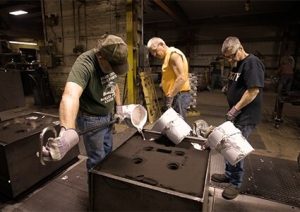
Future Trends in Aluminum Production and Thin-Wall Casting
Emerging fads in aluminum manufacturing and thin-wall casting are positioned to markedly improve the market landscape. As producers increasingly focus on sustainability, developments in reusing processes and reduced energy intake are becoming extremely important. Advanced products and techniques are promoting the production of lighter, more powerful aluminum parts, satisfying markets like automotive and aerospace that demand effectiveness and efficiency.The combination of electronic modern technologies, consisting of expert system and device learning, is enhancing procedures, enhancing top quality control, and minimizing waste. Furthermore, additive manufacturing is gaining grip, enabling for fast prototyping and personalization in thin-wall casting applications.
Partnership in between academia and sector is fostering research study into new alloys and casting approaches, making sure constant improvement. As these fads assemble, they guarantee to boost the abilities of aluminum foundries, placing them for an affordable future, while additionally dealing with the environmental obstacles connected with standard production practices.
Frequently Asked Concerns
What Products Are Typically Made Use Of in Thin-Wall Casting?
Typical products used in thin-wall casting include aluminum alloys, particularly those with high fluidness, such as A356 and A380. These alloys enable the manufacturing of lightweight, durable components with superb mechanical properties and surface finishes.Exactly How Does Thin-Wall Casting Affect the Environmental Footprint?
Thin-wall casting lowers the ecological footprint by reducing product waste, lowering power usage during manufacturing, and making it possible for lighter elements that boost fuel effectiveness in transport. This method promotes sustainability in producing processes and resource conservation.What Is the Cost Contrast Between Thin-Wall and Traditional Casting?
Thin-wall casting generally sustains reduced manufacturing costs compared to standard casting as a result of reduced material use and shorter cycle times. Nonetheless, first configuration and modern technology financial investments can be greater, influencing general cost-effectiveness in particular applications.The length of time Does the Thin-Wall Casting Refine Commonly Take?
The thin-wall casting process typically takes less time than traditional methods, usually calling for a number of hours to a few days, depending upon the complexity and size of the parts, in addition to the details foundry conditions.Are There Particular Qualifications Needed for Thin-Wall Casting?
Yes, specific qualifications are typically needed for thin-wall casting, including top quality monitoring criteria like ISO 9001 and industry-specific accreditations - Metal Foundry. These guarantee conformity with safety and security, efficiency, and ecological guidelines in aluminum factoriesUsing techniques such as investment casting and die casting, suppliers can create top notch parts with marginal problems and smooth surfaces. While traditional casting approaches frequently lead to much heavier parts, the adoption of thin-wall casting techniques substantially improves item weight decrease in production. While traditional casting methods have actually served the industry for years, the development of thin-wall casting has actually presented considerable benefits that necessitate contrast. Thin-wall casting allows for faster air conditioning prices, which can improve the general surface Read Full Article coating and dimensional precision of the castings. Thin-wall casting normally incurs reduced manufacturing costs compared to typical casting due to minimized material usage and much shorter cycle times.
Report this wiki page